5 Signs Your UTV Belt Is About to Snap (And How to Prevent It)
- Randy Wiggins
- 7 hours ago
- 5 min read
Look, there's nothing worse than being miles deep on a trail and having your UTV belt give out. One minute you're ripping through the woods, the next you're limping back or calling for a tow. The good news? Your belt usually gives you plenty of warning before it completely lets go.
Whether you're running a Polaris, Can-Am, or any other side by side, belts are wear items. They're going to fail eventually. But if you know what to look for, you can swap it out before it leaves you stranded.
Sign #1: That Burnt Rubber Smell
If you catch a whiff of burnt rubber while you're riding, that's your belt screaming for help. This smell means your belt is overheating and literally cooking itself from the inside out.
This usually happens when there's too much friction between the belt and the clutches. Maybe you've been running hard in deep mud, towing heavy loads, or climbing steep hills in high gear when you should've been in low. Whatever the cause, that smell is telling you the belt is degrading fast.
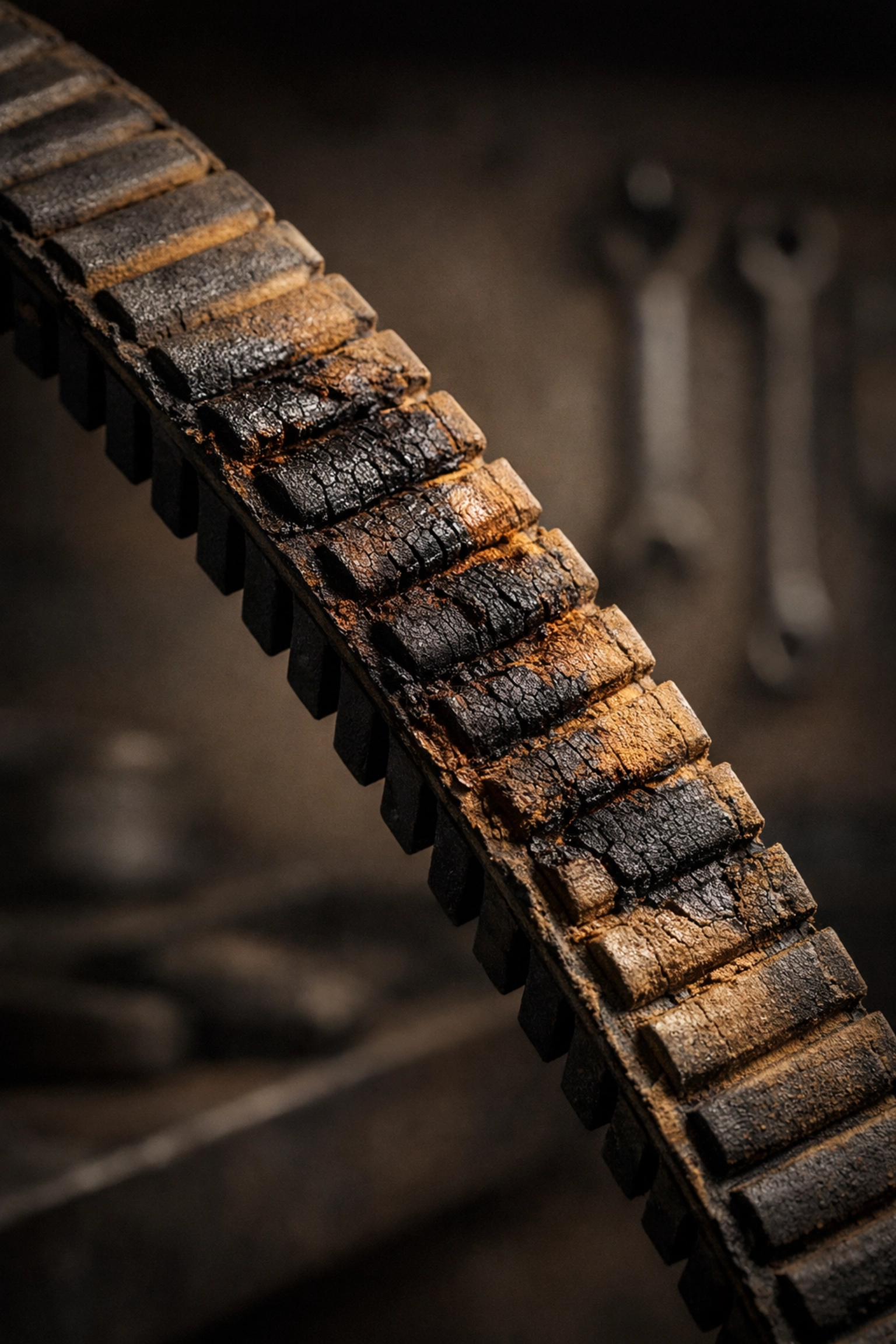
Don't ignore it. A belt that's overheating is a belt that's about to fail. If you smell it more than once or twice, it's time to get it inspected. We see this all the time at our shop – people push through that smell thinking they've got more time, then end up with a snapped belt a week later.
Sign #2: The "Thunk-Ka-Thunk" Sound
This one's hard to miss once you know what you're listening for. It's a rhythmic clunking or knocking sound that comes from your belt housing, usually matching the speed you're going.
What's happening is your belt has started to "hourglass" – meaning it's worn down in the middle and looks narrower there than at the edges. Every time that damaged section rolls through the clutches, it makes that distinctive thunk sound.
This kind of damage usually comes from getting stuck and holding the throttle wide open while your wheels spin. The clutch stays in one position, cooking the same spot on the belt over and over until it burns a groove into it.
If you hear this sound, you're on borrowed time. The belt might last another ride or two, but it's definitely coming apart soon.
Sign #3: Knocking While Riding on Smooth Ground
Here's a weird one that catches people off guard. You're cruising down a smooth, flat trail or across a field, and you feel a rhythmic thumping or knocking sensation through the whole machine.
This is another symptom of that hourglassing we talked about. The belt has been damaged and now it's not running smooth through the clutches anymore. Every rotation, that damaged section hits and you feel it.
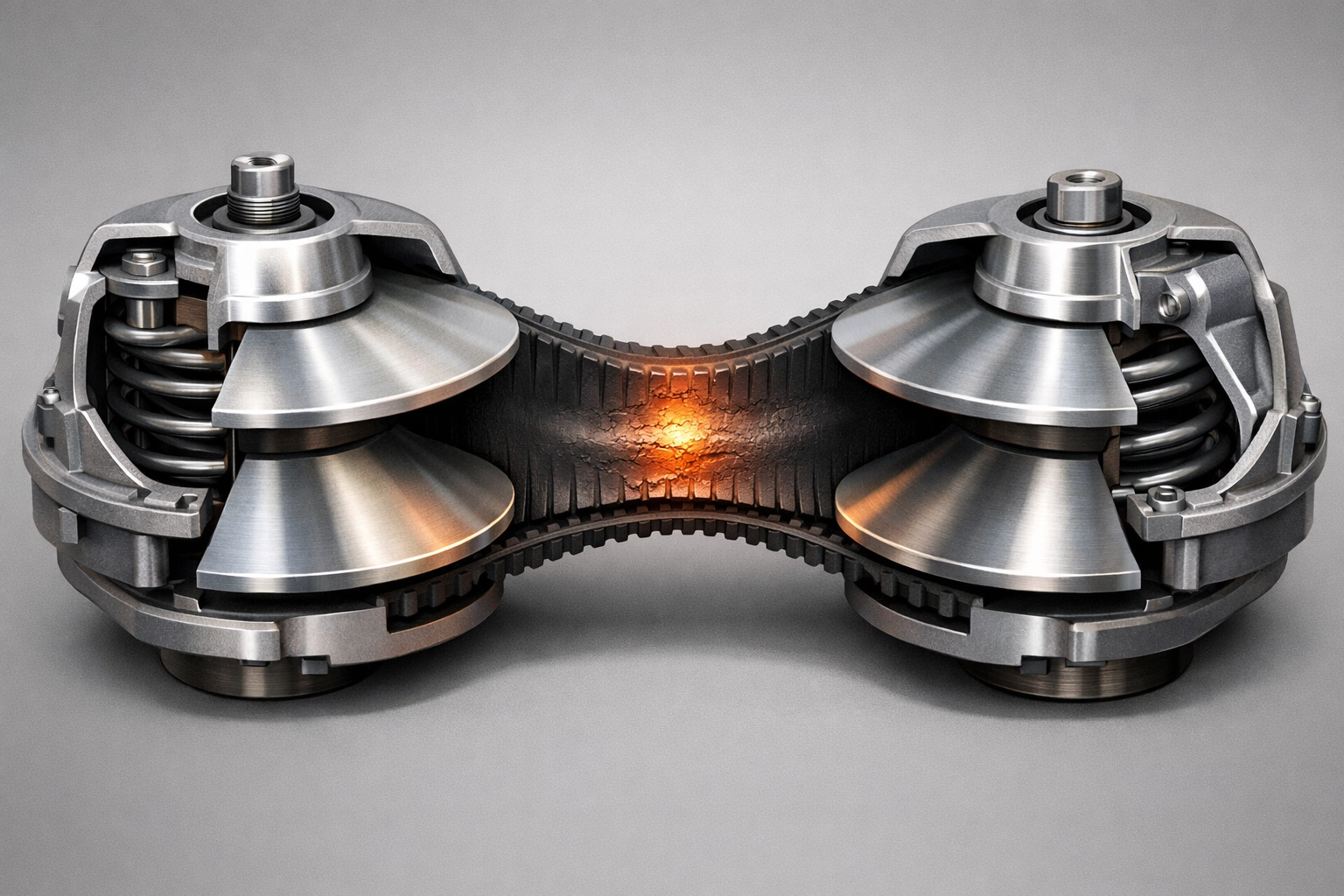
The frustrating part is this usually happens to people who've been trail riding responsibly. But then they got stuck once, gave it too much throttle trying to power through, and burned that one spot on the belt. Now even normal riding feels rough.
Sign #4: Visible Cracks, Fraying, or Missing Chunks
This one's pretty straightforward. Pop your belt cover off and take a look. If you see any of these, your belt needs to go:
Cracks running across the belt
Frayed or fuzzy edges
Missing chunks or pieces
Shiny, glazed-over sections
Discoloration (usually dark brown or black spots)
A healthy belt should look relatively uniform in color and texture. Any visible damage means the belt's structural integrity is compromised.
The thing is, most people never look at their belt until something goes wrong. Make it a habit to inspect your belt every few rides, especially after a hard day of riding. It takes five minutes and can save you from a long walk.
Sign #5: Slipping or Not Grabbing
You hit the throttle and the engine revs, but you're not moving – or you're moving way slower than you should be. That's your belt slipping.
Sometimes this happens because the belt housing is full of mud, dirt, or debris. The contamination gets between the belt and clutches, and they can't grip properly. Other times it's because the belt itself is worn so smooth it can't grab anymore.
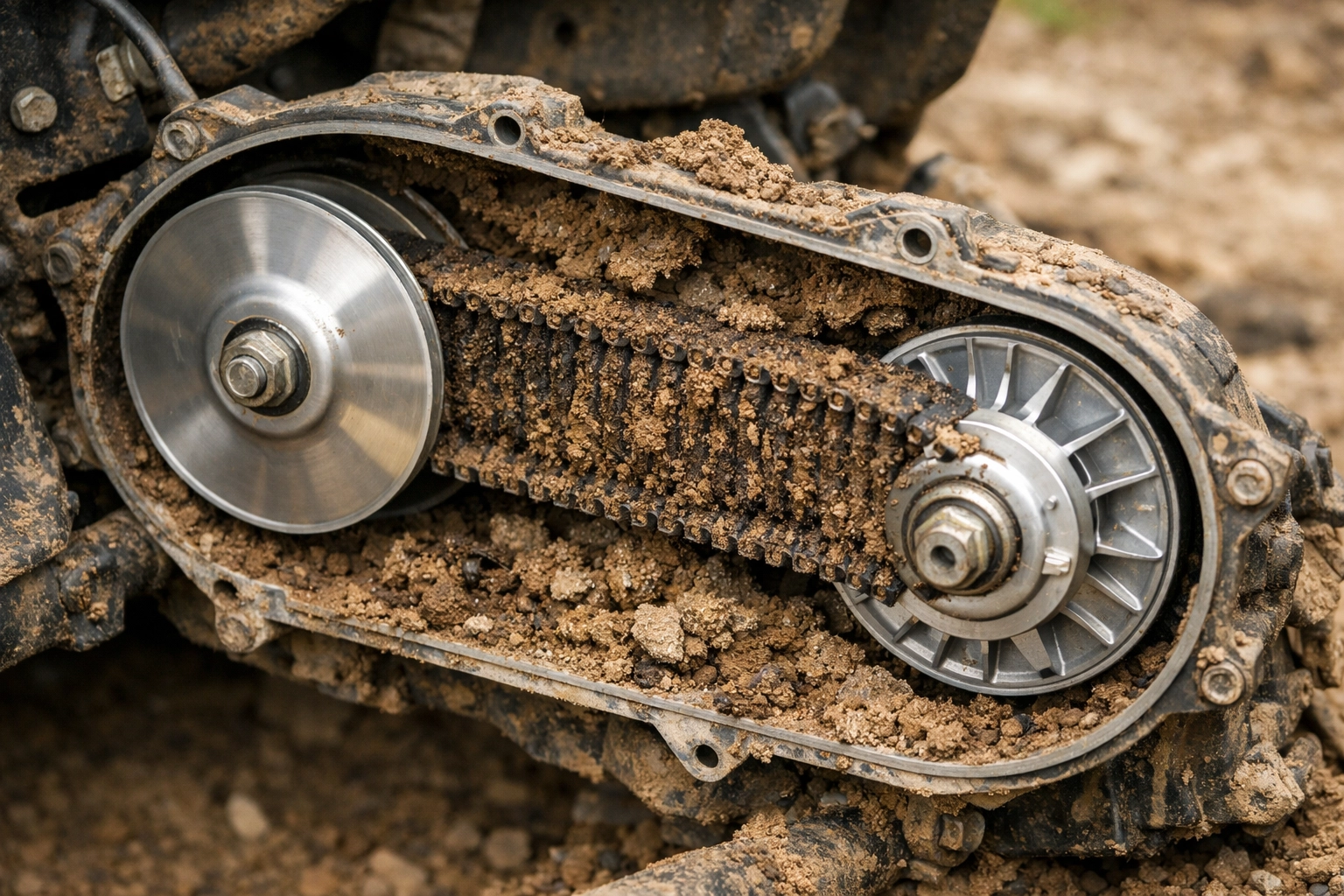
We also see this after people cross deep water and don't clean things out afterward. Water and grit get in there, and suddenly nothing works right.
If your UTV is slipping, don't keep riding it. You're just making it worse and potentially damaging your clutches too.
Why Belts Fail (And How to Make Them Last)
Understanding why belts fail helps you prevent it. Here are the biggest killers:
Dirt and Debris: This is the number one cause we see. Mud, sand, and dirt get into the belt housing and act like sandpaper, wearing everything down fast. After riding in nasty conditions, clean out your belt housing. It's not fun, but it'll save you money.
Wrong Gear Selection: Running in high gear when you should be in low puts massive strain on the belt. Use low gear for mud, sand, heavy loads, towing, and climbing. Save high gear for cruising on hard-packed trails.
Getting Stuck and Gunning It: We get it – sometimes you panic when you're stuck and just hammer the throttle. But that's a belt killer. If you're stuck, back off and try a different approach. Use 4WD, low range, and steady throttle instead of aggressive bursts.
Heat: Belts running over 200 degrees for extended periods will fail. Make sure your vents aren't blocked and give the machine breaks during hard riding.
Cheap Belts: Trying to save money with a bargain-bin belt usually backfires. Stick with OEM or quality aftermarket belts from reputable brands.
How We Can Help
At Premier ATV And Cycle Repair LLC, we handle UTV belt issues all day, every day. Whether you need a simple belt replacement or you've got clutch problems causing premature belt wear, we've got you covered.
We stock quality belts for most major brands and can usually get you in and out quickly. More importantly, we'll check your clutches, alignment, and belt housing to make sure we're fixing the root cause, not just slapping on a new belt that'll fail in another month.
If you're anywhere near us and need side by side repair, give us a call. We'd rather swap your belt in the shop than have you deal with it on the trail.
The Bottom Line
Your UTV belt is going to fail eventually – that's just the nature of the beast. But it doesn't have to leave you stranded. Pay attention to these warning signs, do basic maintenance, and replace the belt before it snaps.
A new belt costs way less than a tow truck or missing a great day of riding because you're broken down. If you're seeing or hearing any of these signs, don't wait. Either replace it yourself or bring it by the shop and let us take care of it.
Your future self – the one not stuck on a trail with a snapped belt – will thank you.
Comments