ATV and UTV Oil Change: How Often If You Only Ride Weekends? (And What Happens If You Wait)
- Randy Wiggins
- Feb 17
- 6 min read
Here's what we hear all the time at the shop: "I only ride on weekends, maybe a few hours a month. I'm nowhere near the mileage for an oil change. I'm good, right?"
Wrong.
If you're a weekend warrior who thinks low hours mean you can skip oil changes, you're setting yourself up for expensive engine problems down the road. The truth is, time matters just as much as miles or hours – sometimes more.
Let's break down exactly how often you need to change your oil, and what's happening inside your engine while it sits in the garage between rides.
The Short Answer: Every Six Months
If you only ride weekends, plan on changing your oil every six months, regardless of how many hours or miles you've put on.
Yeah, we know. Your owner's manual probably says something like "every 100 hours or 1,000 miles or six months, whichever comes first." When you're only riding a few hours a month, you're never going to hit those hour or mileage marks. That's exactly why the time-based interval exists.
Most weekend riders accumulate maybe 50-75 hours in a full year if they're riding regularly. You'd think that means you could wait a year or more between oil changes. But your engine doesn't care about your riding schedule. Oil breaks down whether you're using it or not.
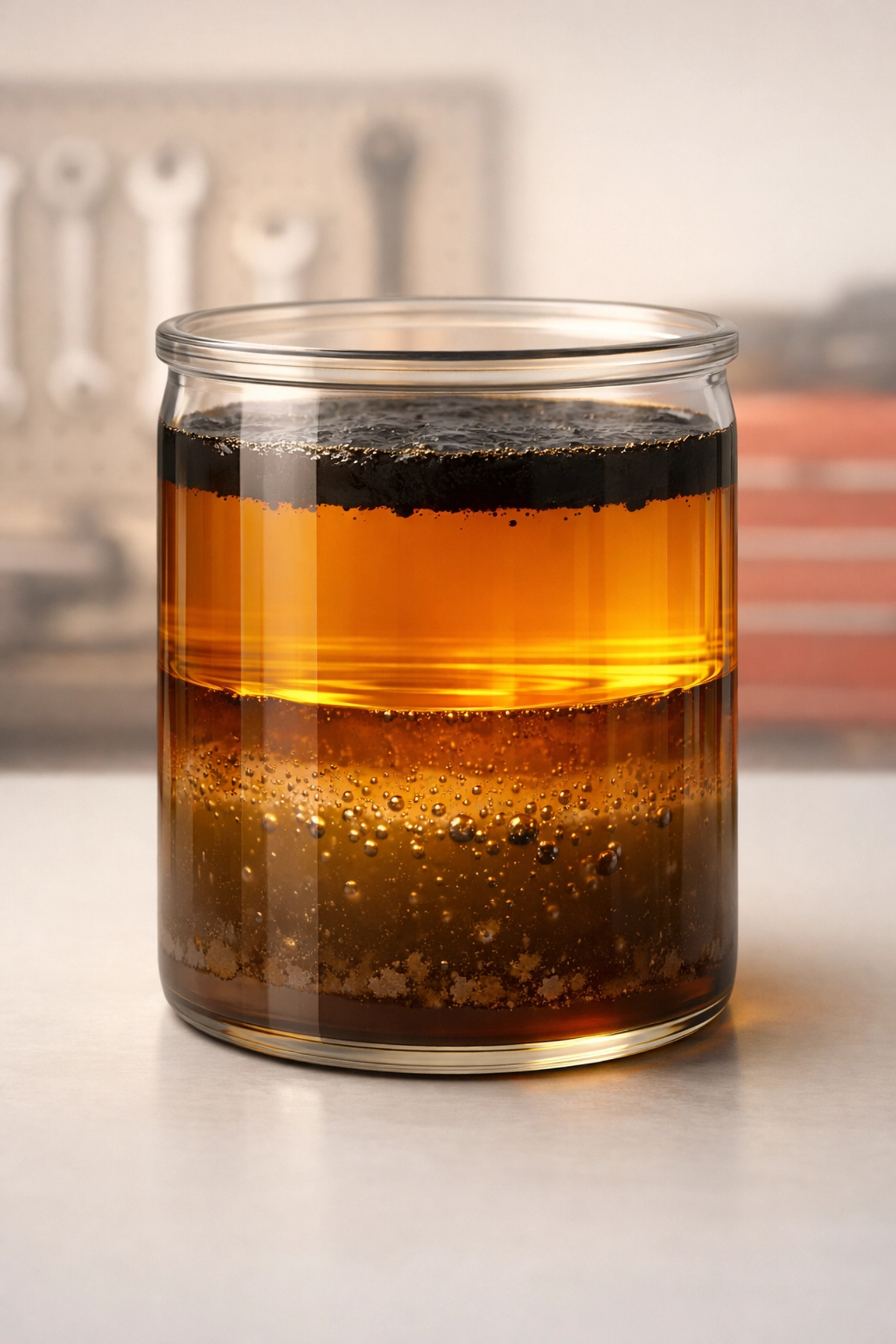
What Happens to Oil When Your Machine Just Sits
This is where things get interesting. You'd think oil sitting in an engine would just... sit there. Stay fresh. Wait patiently for your next ride.
Nope.
Even when your ATV or UTV is parked in the garage, several things are happening to that oil:
Temperature cycling is the big one. Your garage gets hot in summer, cold in winter. That oil is constantly expanding and contracting with temperature changes. This breaks down the additives that keep the oil doing its job.
Condensation builds up inside the engine. Every time temperatures change, moisture forms inside your crankcase. That water sits in your oil, and it doesn't just evaporate. Over time, it creates a nasty sludge and can cause corrosion on internal engine parts.
Acids form as the oil breaks down. Fresh oil has additives that neutralize acids. Old oil? Those additives are depleted. Now you've got acidic oil sitting on your engine's metal parts, slowly eating away at them.
Contaminants settle but don't disappear. All the dirt, metal particles, and combustion byproducts from your last ride are still floating around in that old oil. The longer they sit, the more damage they do.
This is why manufacturers include that time-based interval. They know what happens to oil over time, even with low use.
Why "Low Miles" Doesn't Mean "Healthy Oil"
Let's say you put 500 miles on your side by side last year. That's not even close to the 1,000-2,000 mile service interval in your manual. But here's the thing – those 500 miles probably happened over the course of 12 months, with the machine sitting for days or weeks between rides.
Every time you start that engine after it's been sitting, you're doing what mechanics call a "cold start." Cold starts are brutal on engines because the oil has drained back into the pan. For the first few seconds of running, there's minimal lubrication protecting your engine parts. Metal grinds on metal until the oil pump gets everything circulating again.
If you rode 1,000 miles in one month, you'd do way less damage than riding 500 miles spread out over a year with lots of cold starts. Weird, right? But that's how engines work.
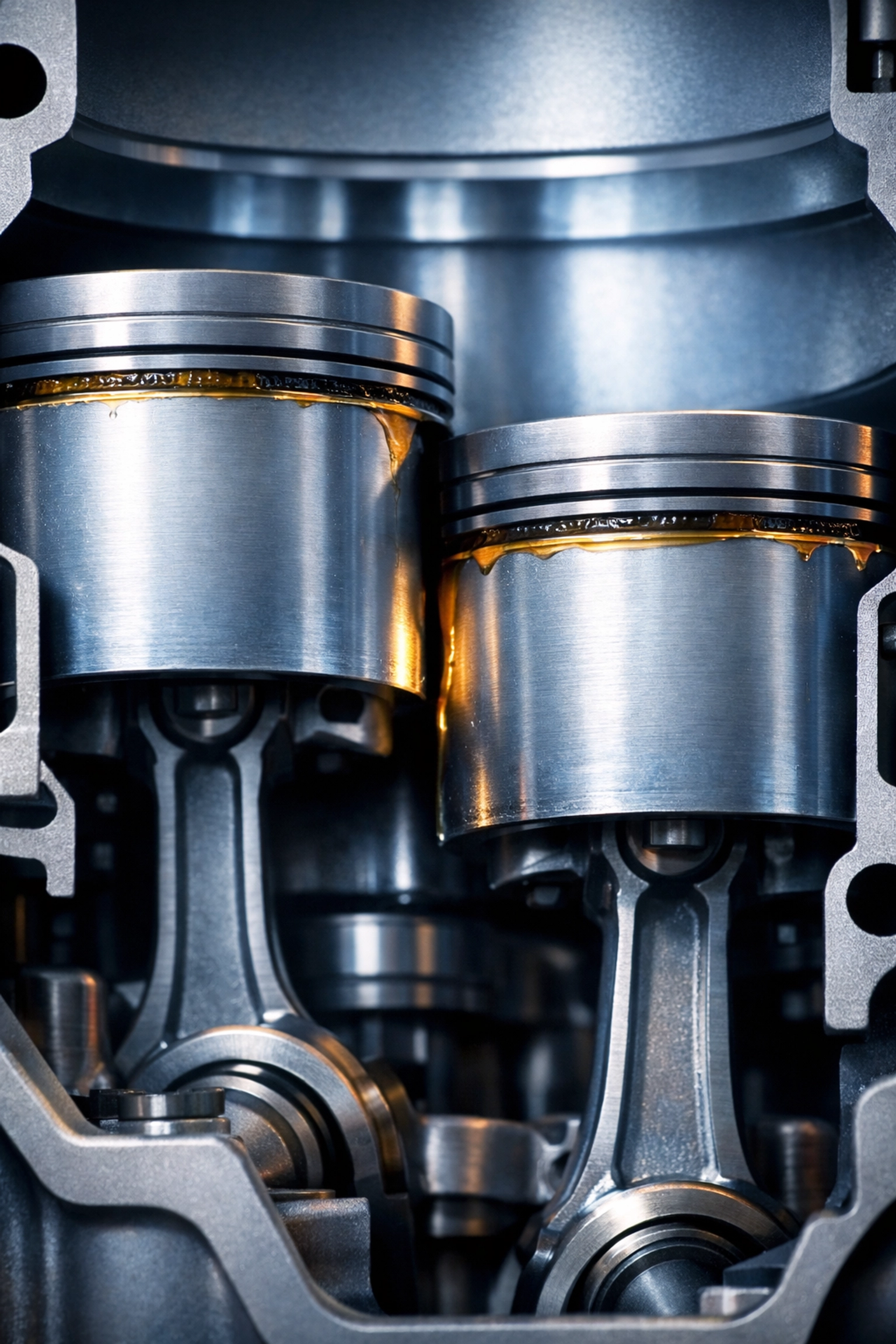
The Real Risks of Waiting Too Long
We've seen what happens when people push their oil change intervals too far. It's not pretty, and it's definitely not cheap.
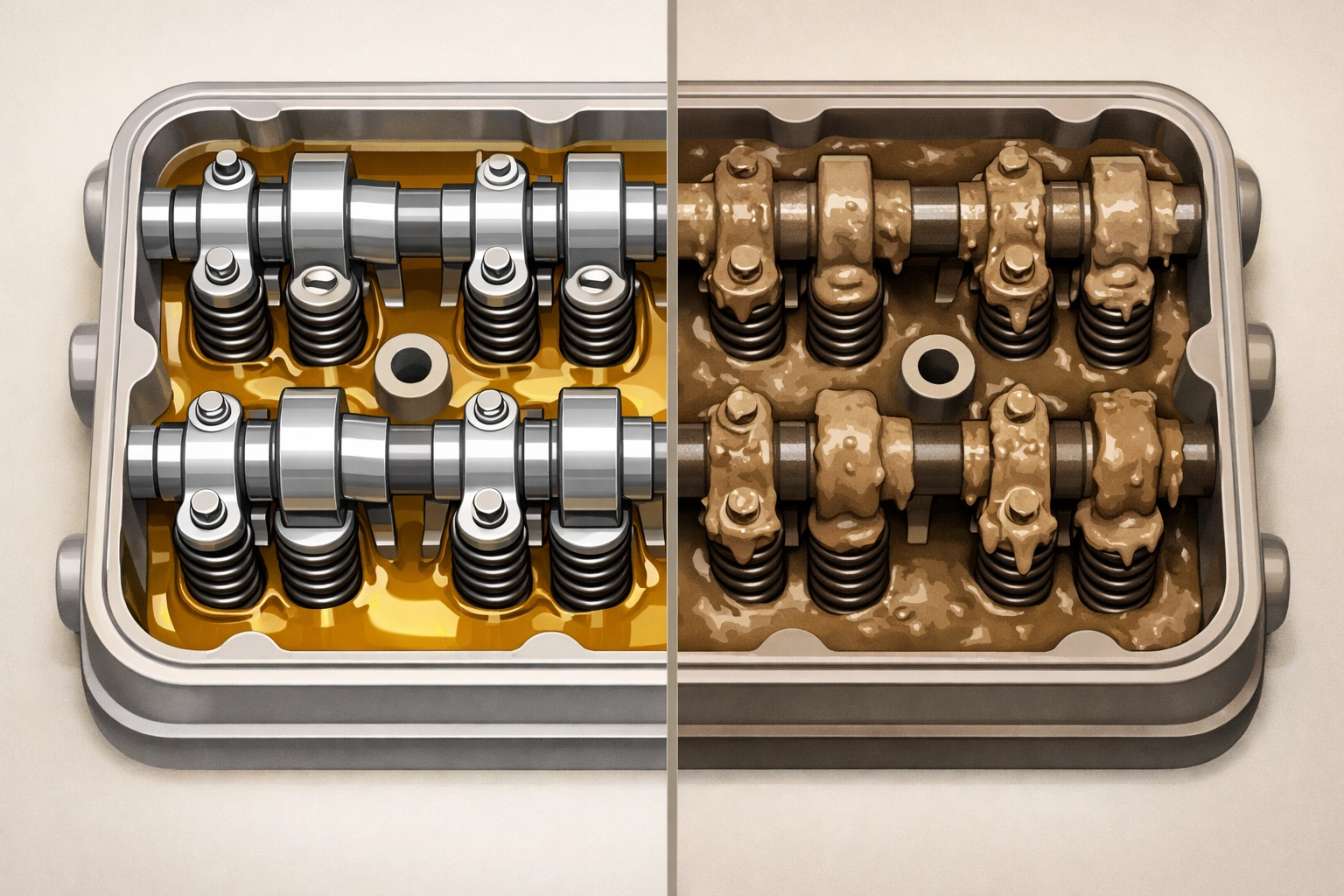
Moisture buildup is usually the first problem. Water in your oil creates a milky, light-brown sludge. This stuff clogs oil passages, prevents proper lubrication, and can cause catastrophic engine failure. We've pulled valve covers off machines that sat too long between oil changes, and it looks like chocolate pudding inside.
Increased engine wear happens gradually. You won't notice it at first. But over time, that degraded oil stops protecting your piston rings, cylinder walls, bearings, and valves. Everything wears faster. Eventually, you'll notice loss of compression, burning oil, hard starting, and reduced power.
Acid corrosion eats away at engine internals. We've seen cam lobes with pitting, bearing surfaces that look like sandpaper, and cylinder walls with visible corrosion damage – all from old, acidic oil that sat too long.
The frustrating part is that this damage happens slowly. You won't know there's a problem until something fails. And by then, you're looking at an engine rebuild or replacement instead of a $50 oil change.
The Break-In Period Exception
One important note: if you just bought a new ATV or UTV, your first oil change needs to happen way sooner than six months.
Most manufacturers recommend the initial oil change at 25 hours, 250-500 miles, or one month – whichever comes first. This is critical because new engines shed metal particles as everything breaks in and seats together. You want to get that contaminated oil out of there ASAP.
After that first change, you can move to the regular six-month schedule for weekend riding.
How to Keep Track
If you're only riding occasionally, it's easy to lose track of when you last changed the oil. Here's what works:
Write the date on a piece of tape and stick it somewhere visible – on the frame, the dash, or inside the service panel. Some people write directly on the oil filter with a permanent marker.
Better yet, set a reminder on your phone for six months from your last change. That way you'll get a notification even if you haven't touched the machine in months.
Keep a simple maintenance log. Just a notebook where you write down the date, hours, and what service you did. Takes 30 seconds and saves you from guessing later.
What If You Only Ride a Few Times a Year?
Here's where it gets a little grey. If you literally only take your machine out 3-4 times a year, do you still need to change the oil every six months?
Technically, yes. Oil still degrades sitting there. Moisture still builds up. Acids still form.
Practically, some people stretch it to once a year if they're barely using the machine. But you're taking a risk. And honestly, oil changes are cheap compared to engine repairs.
Our recommendation? Stick to six months. It's cheap insurance. If you really can't swing that, at minimum change it once a year and make sure you're running the machine long enough each ride to get everything up to full operating temperature. That helps burn off condensation and keeps things circulating.
Why This Matters for Side-by-Sides Especially
UTVs and side-by-sides often have it worse than ATVs when it comes to sitting between rides. They've got more complex engines, often with more displacement and tighter tolerances. That means they're more sensitive to oil quality.
Plus, a lot of people use their UTVs for work around the property – hauling, towing, plowing. That's hard use even if it's only occasional. Hard use means contaminants and acids build up faster in the oil.
If you're searching for "side by side repair" or "utv repair near me" because your machine isn't running right, old oil is often part of the problem. We've fixed a lot of issues that customers thought were major mechanical failures, but it turned out to be neglected oil changes causing performance problems.
When to Get Professional Help
Look, changing oil on most ATVs and UTVs isn't rocket science. If you're comfortable doing it yourself, go for it. But there are good reasons to have a shop handle it:
We check things you might miss – oil level (too full is bad too), condition of the oil filter, any metal particles in the old oil that might indicate wear, oil leaks, proper oil weight for your machine.
We dispose of the old oil properly. You can't just dump it.
We keep records. If something goes wrong down the road, we've got documentation of when service was done and what we found.
And honestly, for the cost difference between DIY and professional service, it's often worth it just for the peace of mind.
What We Use at Premier ATV And Cycle Repair LLC
When you bring your machine to us, we're not throwing cheap oil in there. We use quality oils matched to your specific machine – whether that's OEM recommendations or quality synthetics that often perform even better.
We also check your owner's manual specifications. Different engines need different weights and formulations. A Polaris needs different oil than a Can-Am or Honda. We make sure you're getting exactly what your engine needs.
If you're due for an oil change and you're in our area, give us a call. We can usually get you in and out pretty quick, and we'll make sure everything else looks good while we're at it.
The Bottom Line
If you only ride weekends, change your oil every six months. Period.
Don't let low hours or miles fool you into thinking you can wait. Oil degrades over time regardless of use. The moisture, acids, and contaminants that build up will destroy your engine eventually.
An oil change costs maybe $50-100 depending on your machine. An engine rebuild? That's thousands. Pretty easy math.
Whether you're looking for "atv repair near me" or just trying to keep your weekend warrior running strong, regular oil changes are the cheapest insurance you can buy. Don't wait until something goes wrong. Set that reminder, mark your calendar, and stick to the schedule.
Your engine will thank you by running strong for years to come.
Comments